Home details
Open shelves, without the overcrowding
A shelf can hold your everyday things and still feel thoughtful. The trick is to arrange for real use first, then give a few favorite objects room to be seen.
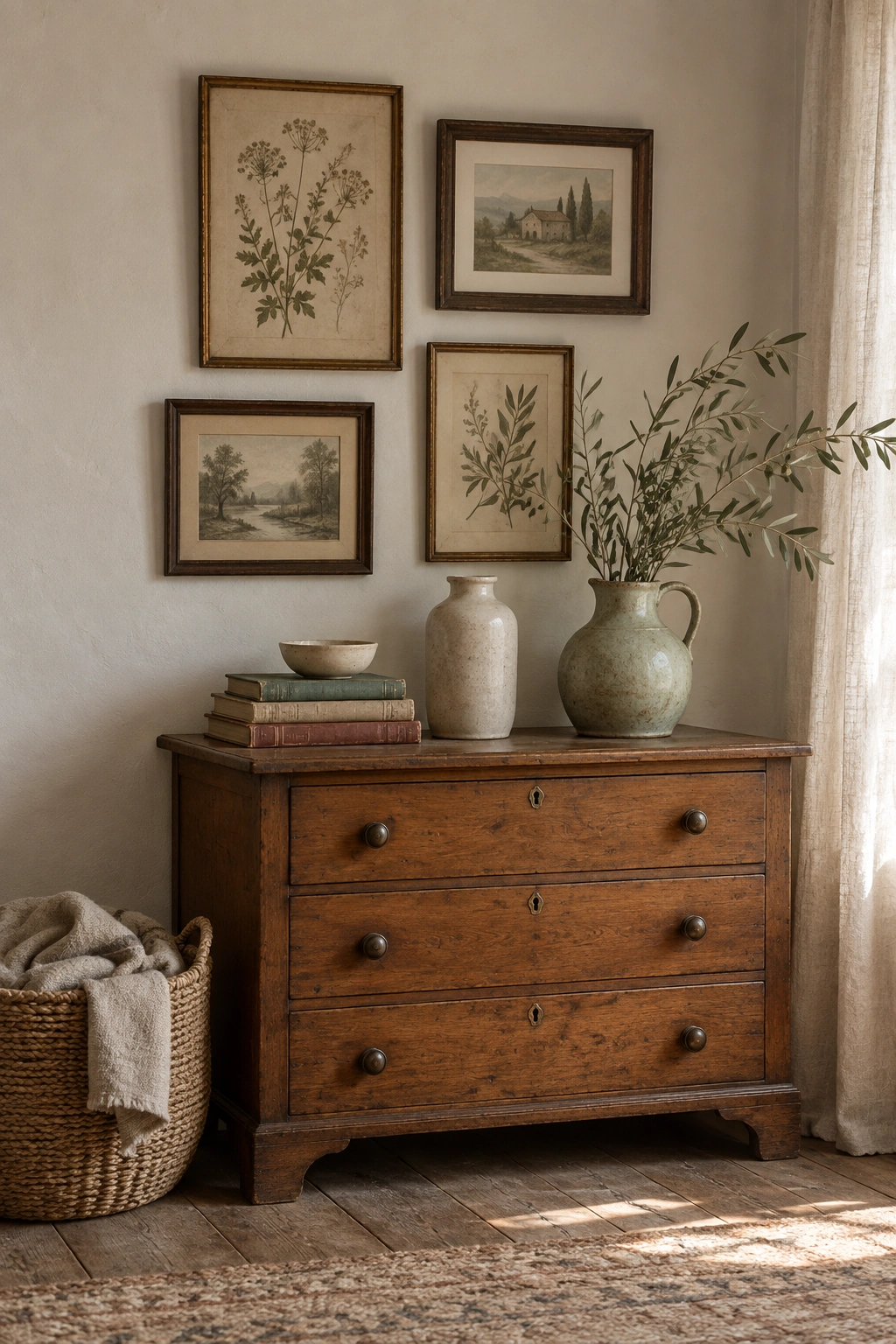
Take everything off first
An empty shelf lets you notice its depth, height, and the light around it. Put back the things you genuinely want within reach before any decoration. In a kitchen, that might be daily cups and a bowl. In a living room, it might be books you return to. Set aside objects that only live there because they have always been there.
Arrange in small, useful groups
Keep similar things together so they are easy to find. Try cups as one group and a short row of books as another. Mix the heights gently rather than making each group the same shape. Avoid stacking objects in a way that makes taking one out a little balancing act.
Let the shelf show
Leave visible space between groups. You do not need to fill a shelf from end to end, and every shelf does not need the same number of objects. Stand back at the distance from which you normally see it. If everything blends into one busy line, remove one group before buying more containers.
Choose what you can maintain
Open storage gathers dust and asks for regular handling. Reserve it for pieces you use or enjoy enough to clean. Check shelf and bracket load limits before adding heavy ceramics or books. Keep fragile pieces away from an exposed edge and follow furniture anchoring instructions where applicable. A beautiful arrangement should feel easy to live beside.
These are styling ideas, not claims of hands-on product testing. As an Amazon Associate I earn from qualifying purchases.